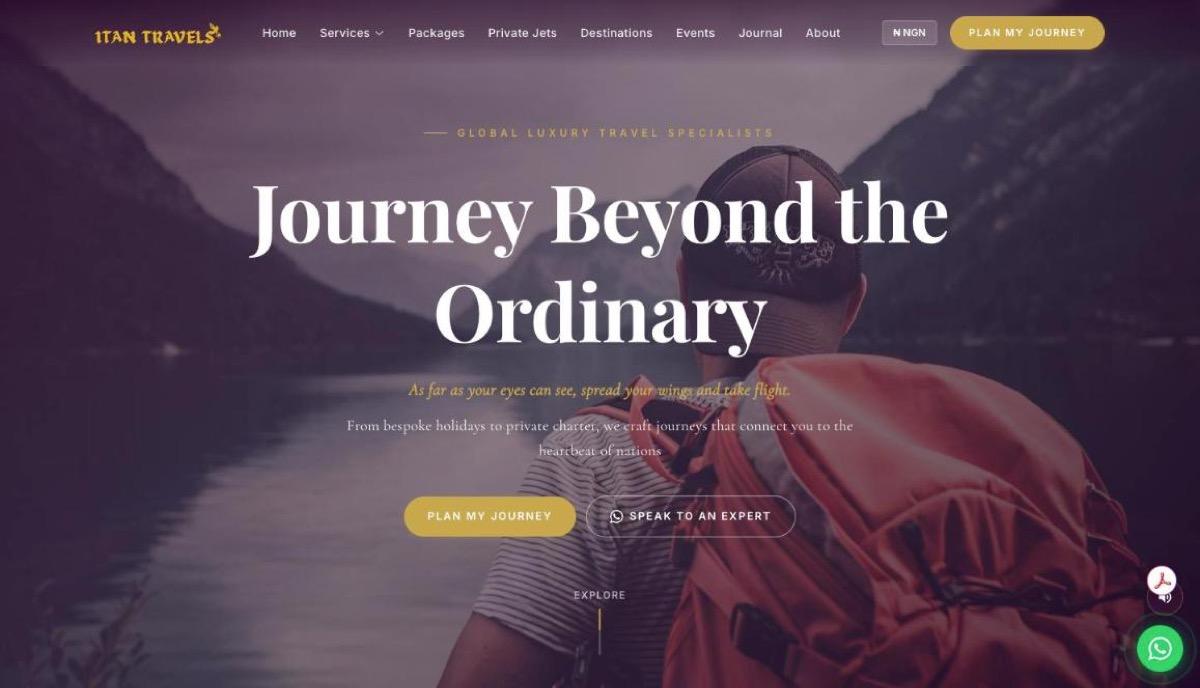
One rule: the owner holds the controls
People spending that kind of money judge a travel company in seconds, so the site had to feel as considered as the trip. Our design rule was just as firm on the other side: everything the owner might ever want to change must be something they can change themselves, with no code and no waiting.
The owner never had to learn code. The site learned to take instructions from the owner.
A working site on day one
Every public page was live on the first day of work: home, packages, destinations, events, hotels, private jets, visa help, a journal and contact. Two days later the owner had an admin where they could edit all of it.
An admin the owner can run
Packages, tours, destinations, events, hotel deals, blog posts, partners, testimonials, newsletter subscribers, staff accounts and enquiries are all managed by the owner, with staff roles controlling who can change what. Even the WhatsApp number, hero images and homepage headline are settings, not code.
Enquiries that reach the right person
Every enquiry form, from packages to private jets to visas, goes straight to the team by email and is recorded in the admin with notes, status and a full email log. A quote calculator promises a reply within a day.
Built for how travel really works
A visa module holds requirements per country, a checklist of documents and price bands, so a visa enquiry is answered with specifics. Prices can be shown in naira, dollars, pounds or euros using current exchange rates. Destinations carry highlights, packages carry tags, and events and hotel deals have their own pages.
Deciding what to build: the owner in the room
We worked in rounds. The owner reviewed, we improved, and we repeated. Several rounds of owner feedback shaped the brand, from navy to a single confident purple, and the work was planned in focused batches: accessibility, search visibility, speed, admin polish and data protection.
Each batch had a clear scope and a clear finish, so the site kept getting better without ever being in an unfinished state.
Fast on any connection
Travel customers browse on all kinds of connections. Images load only when needed and are kept on the site's own storage, so pages never depend on someone else's server. Heavy audio is deferred, analytics never slows a page, and galleries open in a smooth lightbox. A sitemap and search-friendly page structure come built in. For a travel brand, the pictures are the product, so image uploads and previews are dependable.
Privacy and safety by design
Customers share passport and travel details, so privacy is part of the product: a consent banner and policy, spam protection and rate limits on every form, and an automatic nightly job that deletes old enquiries on the schedule the policy promises.
Releases made routine
Releases go out with one command after a safety check, and automated tests cover the key journeys, so updating the site is routine and never risky.